
Central Drugs Standard Control Organization
Directorate General of Health Services
Ministry of Health & Family Welfare
Government of India
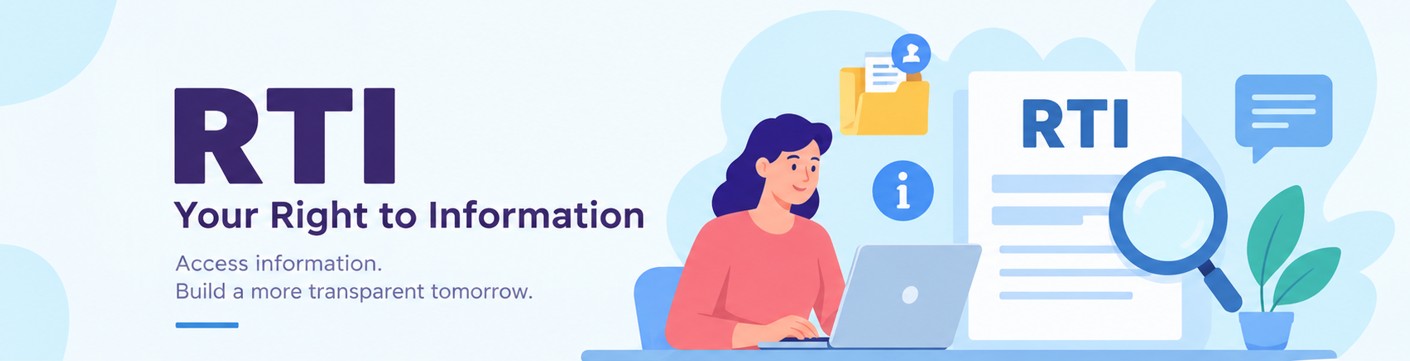

The Right to Information (RTI) is a statutory right provided to citizens of India under the Right to Information Act, 2005. The Act promotes transparency and accountability in the functioning of public authorities by enabling citizens to obtain information held by or under the control of such authorities.
The RTI Act provides a framework for:
-
Seeking information from public authorities.
-
Designating Public Information Officers (PIOs/CPIOs) to provide information.
-
Filing first and second appeals where information is not provided or the applicant is dissatisfied with the response.
-
Promoting proactive disclosure of information by public authorities under Section 4.
-
Protecting information that falls within the exemptions specified under Section 8 and Section 9 of the Act.
The Central Drugs Standard Control Organisation (CDSCO), being a public authority, deals with RTI applications in accordance with the provisions of the RTI Act, 2005.
The Right to Information (RTI) Cell of the Central Drugs Standard Control Organization (CDSCO), Headquarters, functions as the Nodal RTI Cell for the organization under the provisions of the Right to Information Act, 2005.
The key functionalities of the Right to Information (RTI) system are:
-
Receipt of RTI Applications – Facilitates submission and receipt of RTI applications from citizens.
-
Registration and Processing – Enables registration, examination and processing of RTI applications by the concerned CPIO/DPIO.
-
Transfer of Applications – Provides for transfer of applications to the appropriate public authority or concerned CPIO where required under the RTI Act.
-
Information Collection and Disclosure – Facilitates obtaining information from the concerned division/office and providing the information to the applicant within the prescribed time.
-
Communication of Decisions – Enables communication of information, rejection orders, partial disclosure or other decisions to the applicant with appropriate provisions of the RTI Act.
-
First Appeal – Provides a mechanism for applicants to file a first appeal before the First Appellate Authority (FAA).
-
Second Appeal/Complaint – Provides access to the statutory remedy before the Central Information Commission (CIC), wherever applicable.
-
Third-Party Information – Facilitates processing of information involving third parties in accordance with the relevant provisions of the RTI Act.
-
Exemption and Partial Disclosure – Supports examination of information under the exemptions prescribed under Section 8 and Section 9 and partial disclosure under Section 10, wherever applicable.
-
Proactive Disclosure – Supports monitoring and updating of information required to be disclosed suo motu under Section 4 of the RTI Act.
-
Record and Case Management – Maintains records of RTI applications, replies, appeals, correspondence and related actions for monitoring and future reference.
-
Monitoring and Compliance – Facilitates monitoring of timelines, disposal of RTI matters and compliance with directions/orders of the competent authorities and the CIC.
The RTI process across CDSCO broadly covers receipt and registration of RTI applications, examination and allocation to the concerned CPIO/DPIO, collection and scrutiny of information from the concerned division/office, preparation and issuance of the reply within the prescribed timeline, and processing of first appeals, second appeals/complaints and subsequent compliance, wherever applicable. Proper record maintenance and monitoring of RTI matters are also undertaken at each stage.
For detailed procedures, responsibilities, timelines and formats, please refer to the Guidance Documents for handling RTI matter Across CDSCO offices.