
Central Drugs Standard Control Organization
Directorate General of Health Services
Ministry of Health & Family Welfare
Government of India

ABOUT THE CLINICAL RESEARCH ORGANIZATION
Definition of CRO as per NDCTR 2019, rule 2.1 (ia)-Clinical Research Organisation-means the sponsor or a body, commercial or academic or of other category, owned by an individual or an organisation having status of legal entity by whatsoever name called, to which the sponsor may, delegate or transfer in writing, some or all of the tasks, duties or obligations regarding clinical trial or bioavailability or bioequivalence study.
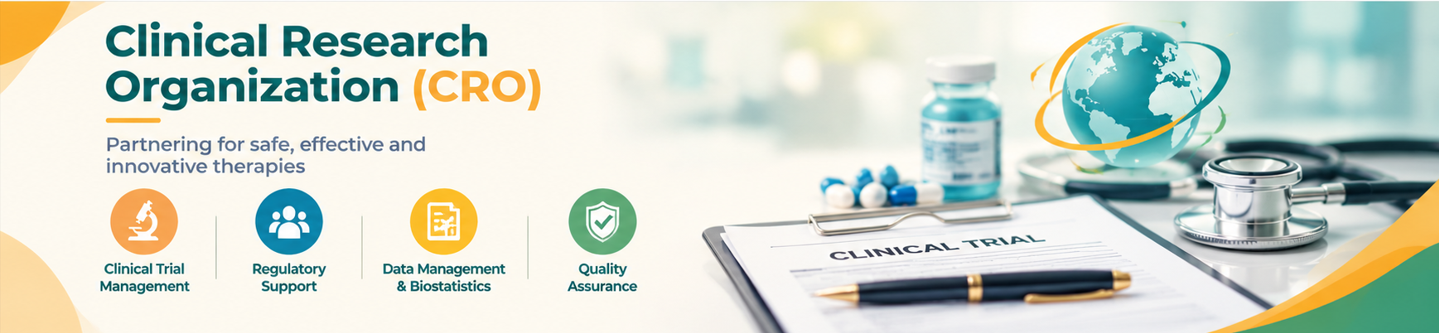
A Clinical Research Organization (CRO) is a specialized service provider that partners with sponsors such as pharmaceutical, biotechnology, and medical device companies to manage and conduct clinical research and trials. CROs play a key role in advancing new medical treatments by ensuring that research is conducted efficiently, ethically, and in compliance with regulatory standards.
A Clinical Research Organization (CRO) provides professional services for the planning, conduct, monitoring, and management of clinical trials in India. The CRO supports sponsors in clinical trial execution in compliance with the New Drugs and Clinical Trials Rules (NDCTR), 2019, Good Clinical Practice (GCP) guidelines, ICMR Ethical Guidelines, and applicable CDSCO regulations.
There should be a valid CTA between CRO and Sponsor before initiation of any trial related activity.
The CRO ensures the protection of subject rights, safety, and well-being, and maintains data integrity and regulatory compliance throughout the clinical trial lifecycle.
Functionalities of Clinical Research Organization (CRO).
1. Review and processing of applications received for registration of CRO (i.e. Form CT-07B) per NDCT Rules 2019 and thereafter issuance of Registration certificate of CRO in Form CT-07C per NDCT Rules 2019
3. Review and processing of post approval changes applications like constitutional changes and change in name& address CRO etc and thereafter approved PAC application.
4. Handling of complaints, parliament questions and RTI queries related to CRO.
5. Planning for inspection of CROs at the time of renewal, if required.
6. Handling/Monitoring of CRO Inspections based on the trial monitoring documents like PSURs, ASRs, complaints received etc.
7. Review & action taken in respect to CRO inspection reports received from Inspection Team/Zonal Offices (Show-cause notice, response of show-cause notice, warning, debarment, suspension etc.)
8. Data-base management (receipts/files/other misc. data including permissions generated, maintenance of guard files of query/approvals, parliament questions answered, CSR etc.).
 Guidelines Document
 Sugam User Manual
 FAQ
 Checklist Documents